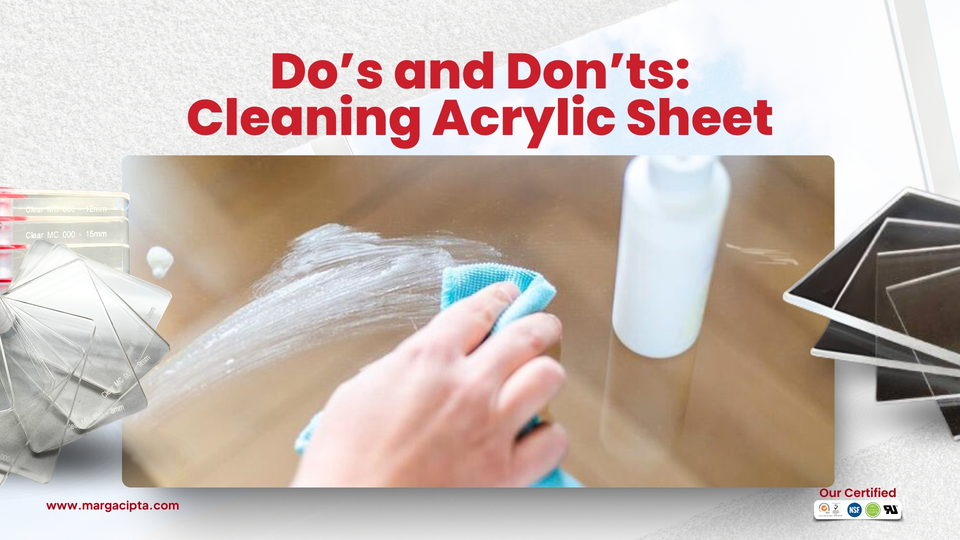
Do’s and Don’ts: Cleaning Acrylic Sheet the Right Way

Informational


Unlike glass, acrylic needs special care during cleaning to avoid scratches, clouding, or even cracks. If cleaned improperly, acrylic can lose its aesthetic appeal and optical clarity over time.

To ensure your acrylic sheet stays clean and clear, it's important to follow the right cleaning practices, and avoid the wrong ones.

In this article, find out about do’s and don’ts of cleaning acrylic sheet surfaces, so you can maintain their quality and extend their lifespan.

1. Do Use a Soft, Non-Abrasive Cloth

When cleaning an acrylic surface, always use a soft microfiber or 100% cotton cloth. These materials are gentle and help remove dust and fingerprints without scratching the surface.

Before applying any cleaning solution, it’s a good idea to lightly rinse or blow off loose dust particles to prevent them from causing fine scratches when wiped.

2. Don’t Use Rough Materials or Paper Towels

Many people mistakenly use paper towels, sponges, or regular cleaning rags on acrylic sheets. These materials may seem soft but can actually be abrasive enough to create tiny scratches.

Over time, these scratches accumulate and cause the acrylic to appear dull or hazy. Avoid using any rough fabric or material that could compromise the surface.

Read also: Why Cast Acrylic Is Better Than Glass: Benefits You Should Know

3. Do Use Acrylic-Safe Cleaners

If you’re using a cleaning solution, make sure it’s specifically formulated for acrylic or plastic surfaces. You can also use mild soap mixed with water for everyday cleaning.

Spray the solution onto the cloth rather than directly onto the sheet, then gently wipe in a circular motion to remove dirt and grime. Rinse with clean water afterward and dry with a fresh, soft cloth.

4. Don’t Use Ammonia or Alcohol-Based Products

One of the biggest mistakes in cleaning acrylic is using harsh chemical cleaners like glass cleaner, alcohol, or products containing ammonia.

These substances can cause the surface to crack, discolor, or become cloudy over time. Even though acrylic may look like glass, it’s chemically different and much more sensitive to solvents. Avoid any cleaner not labeled as safe for plastics or acrylic.

5. Do It Carefully with Clean Hands

Before you begin cleaning, make sure your hands are clean to avoid transferring oils and dirt onto the surface. Move your hands gently and avoid applying excessive pressure.

If you’re cleaning a larger sheet or panel, support it evenly to prevent bending or stress that might cause cracks.

Read also: Acrylic Sheet Thickness Guide: How to Choose the Right One

6. Don’t Use Dry Wiping Methods

Never clean an acrylic sheet while it's dry. Dry wiping can drag dust and dirt particles across the surface, increasing the risk of scratching.

Always ensure the surface is wet or at least slightly damp before wiping, as this creates a buffer between the cloth and the acrylic.

7. Do Regular Maintenance

Routine maintenance helps prevent the buildup of dust, oil, and grime that can be harder to remove later. Cleaning your acrylic sheets regularly using the right methods will keep them looking crystal clear and reduce the need for harsh scrubbing or polishing.

Consistency in care goes a long way in preserving the appearance of your acrylic installations.

Cleaning acrylic sheet the right way is essential if you want to maintain its beauty, durability, and clarity.

While acrylic is a strong and versatile material, it still needs gentle handling and the proper techniques to stay in top condition.

Avoid common cleaning mistakes, choose the right materials, and your acrylic sheet will remain as stunning as the day it was installed.

Need high-quality cast acrylic sheet for your next project?

Visit our Instagram for more details about our cast acrylic sheets, or download our Product Catalog here.
News Release

Introducing Our LED VIVID & LED Ready Cast Acrylic Sheet

September 25, 2018September 26, 2018 mcwsi


PT MARGACIPTA will be launching its new line of MC® LED VIVID AND LED READY CAST ACRYLIC during the “Margarita’s with Margacipta” event at the IAPD Annual Convention in Washington.


MC® LED Ready Cast Acrylic Sheet is formulated to optimize color performance in front of today’s LED systems used in the sign industry; display market. You’ll see excellent brightness and even illumination with NO HOT SPOTS!  


MC® LED Vivid Cast Acrylic Sheet is chemically formulated with light diffusing technologies that enhance maximum brightness and light illuminating uniformity particularly suited to LED edge lighting.


See you on Tuesday at 6p at The Side Car in the Washington Hilton or Contact Us or Your Account Rep for More Details and Pricing.


Cast Acrylic, LED Acrylic, Cast Acrylic, display, LED, lights, plastic, sign

Custom Acrylic Sheet Supplier in Indonesia: How to Choose the Right Partner

As demand for acrylic products continues to grow, finding a reliable custom acrylic sheet supplier in Indonesia becomes increasingly important.

Whether for retail displays, signage, construction, or industrial use, choosing the right supplier can significantly impact your project’s quality and efficiency.

But with many options available, how do you choose the right partner?

Why Choosing the Right Supplier Matters

A good supplier does more than just provide materials. They ensure:

  • Consistent product quality
  • Accurate customization
  • Reliable delivery timelines
  • Professional support and consultation

Working with the wrong supplier can lead to delays, poor results, and higher costs.

Find out key factors to consider and how to find a good acrylic supplier for your needs.

Read more: 100% Virgin MMA: The Key to High-Quality Acrylic Sheets

Key Factors to Consider

1. Product Quality

High-quality acrylic should have:

  • Excellent clarity
  • Smooth surface finish
  • Strong durability

Always check if the supplier offers cast acrylic for premium applications.

2. Customization Capability

A reliable supplier should provide:

  • Custom cutting and sizing
  • Bending and forming
  • Laser cutting

This is crucial for projects that require precise specifications.

3. Variety of Options

Choose a supplier that offers:

  • Multiple thickness options
  • Clear, colored, and frosted acrylic
  • Different acrylic types for various applications

More options mean better flexibility for your project.

4. Experience and Reputation

Look for suppliers with:

  • Proven track record
  • Positive client feedback
  • Experience in handling diverse industries

Experienced suppliers are more likely to understand your needs.

5. Lead Time and Availability

Timely delivery is essential, especially for business projects. Ensure the supplier can:

  • Meet deadlines
  • Maintain consistent stock availability

Read also: Does Acrylic Shatter? Find Out Its Strength and Durability

Questions to Ask Before Choosing

  • Do they provide custom fabrication services?
  • What types of acrylic do they offer?
  • Can they handle bulk orders?
  • How fast is their production and delivery time?

Common Mistakes to Avoid

  • Choosing based on price alone
  • Ignoring material specifications
  • Not verifying supplier credibility

These can result in poor-quality output and project delays.

Benefits of Working with a Professional Supplier

A trusted supplier helps you:

  • Achieve precise results
  • Reduce material waste
  • Improve overall project quality

They act as a partner, not just a vendor.

Conclusion

Choosing the right custom acrylic sheet supplier in Indonesia requires careful consideration of quality, capability, and reliability.

Need a trusted acrylic partner?

Marga Cipta offers custom acrylic sheet solutions with various types, sizes, and fabrication options to support your project needs. Work with a supplier that understands quality and precision.

The Global Roller Coaster – Closed for the Season?

May 10, 2019May 11, 2019 mcwsi


Are the days of monthly acrylic price creep behind us? Are we entering a period of regular price drops? Will price stability level the playing field and reduce the risks of pricing shenanigans? Here we are, one year after our 2018 Global MMA Roller Coaster assessment considering the impact of a reverse pricing trajectory that is challenging purchasing and marketing managers throughout the supply chain.


MMA prices (methyl methacrylate, the raw material used to produce a wide range of products distributed by IAPD members) have declined about 25% since their 2018 peak levels. Some distributors are enjoying richer profit margins while others are losing market share to aggressive players betting the decline will continue.


In short, soft demand, over supply of MMA and the possible threat of trade war tariffs at most levels of the supply chain have played a part in the current trends. Since the 1st Qtr ’19, prices in China have not decreased further indicating some stability. The South East Asian markets, however, continue to show weakness that point to further declines. In fact, we anticipate another price drop in May as South East Asian MMA demand is still oversupplied.


While stocks and output seem to have completed the needed adjustments during the 1st Qtr, the overall softer market does not warrant any price rebound. Any further price drops should not reach the magnitude of the previous quarter. We have probably hit bottom and any China price increase will be offset by other markets.


In the U.S., fires at some Lucite tanks will disrupt domestic supply. The same situation is affecting Brazil. Once those suppliers replenish, and barring any further unforeseen events, prices should remain level through the end of the year.


MARGACIPTA, Asia’s largest cell cast manufacturer, closely monitors MMA prices on a regular basis in order to provide our clients with the latest pricing data. Keep in touch with us or your sales reps as you manage your inventory positions and make smarter purchasing and marketing decisions possible.


Acrylic, MMA Acrylic, Asia, Global MMA, internatiional, MMA, pricing

Clear Acrylic Sheet vs Glass: Pros, Cons & Key Differences

Clear acrylic sheet and glass may look similar, but they have significant differences in strength, weight, safety, and flexibility.

In general, clear acrylic sheet is lighter, more impact-resistant, and easier to fabricate, while glass is more scratch-resistant and traditionally used for windows.

Because of these advantages, acrylic sheets are widely used for signage, display cases, partitions, and architectural panels.


Key Differences Between Acrylic Sheet and Glass

Feature

Clear Acrylic Sheet

Glass

Weight

About 50% lighter

Heavier

Impact resistance

Up to 10–17× stronger

Can shatter easily

Transparency

Up to 92% light transmission

Around 90%

Fabrication

Easy to cut, bend, and shape

Difficult to modify

Safety

Shatter-resistant

Breaks into sharp pieces

Scratch resistance

Lower than glass

Higher

These properties make acrylic a popular alternative for many modern applications.

Read also: Cost Breakdown: How Acrylic Can Help You Save Budget in Long-Term Projects

Pros of Clear Acrylic Sheet

Clear acrylic sheets offer several advantages compared to glass.

1. Much More Impact Resistant

Acrylic is significantly stronger against impact, making it safer for environments where breakage is a concern.

2. Lightweight

Acrylic weighs roughly half as much as glass, making installation easier and reducing structural load.

3. Easy to Fabricate

Acrylic can be:

  • Laser cut
  • CNC machined
  • Heat bent
  • Thermoformed

This flexibility makes it ideal for custom designs.

4. Excellent Optical Clarity

High-quality acrylic can achieve up to 92% light transmission, making it one of the clearest plastic materials available.

Cons of Clear Acrylic Sheet

Despite its advantages, acrylic also has limitations.

1. More Prone to Scratches

Compared to glass, acrylic surfaces can scratch more easily.

2. Higher Thermal Expansion

Acrylic expands more when exposed to temperature changes.

3. Chemical Sensitivity

Certain solvents can damage acrylic surfaces.

When to Choose Acrylic Instead of Glass

Acrylic sheets are better when you need:

  • Lightweight panels
  • High impact resistance
  • Custom shapes or fabrication
  • Safer materials for public environments

Common applications include:

  • Retail signage
  • LED light boxes
  • Display stands
  • Protective barriers
  • Architectural panels

Read also: Acrylic for Industrial Use: From Machine Guards to Safety Barriers

FAQ: Clear Acrylic Sheet vs Glass

Is acrylic stronger than glass?

Yes. Acrylic is significantly more impact resistant than glass and less likely to shatter.

Is acrylic clearer than glass?

High-quality acrylic can transmit slightly more light than glass, making it very clear.

Does acrylic scratch easily?

Yes, acrylic is more prone to scratches compared to glass.

Can acrylic replace glass?

In many applications such as signage, displays, and partitions, acrylic can effectively replace glass.

Looking for High-Quality Clear Acrylic Sheets?

If you need a material that is lighter, safer, and easier to fabricate than glass, clear acrylic sheets are a reliable alternative for many applications such as signage, displays, partitions, and architectural panels.

PT. Margacipta Wirasentosa supplies high-quality acrylic sheets with excellent optical clarity and consistent thickness, suitable for both commercial and industrial use.

  • High transparency
  • Durable and impact resistant
  • Easy to cut, shape, and fabricate
  • Suitable for signage, displays, and protective panels

Contact our team at info@margacipta.com or explore our acrylic sheet products to find the right material for your project.